


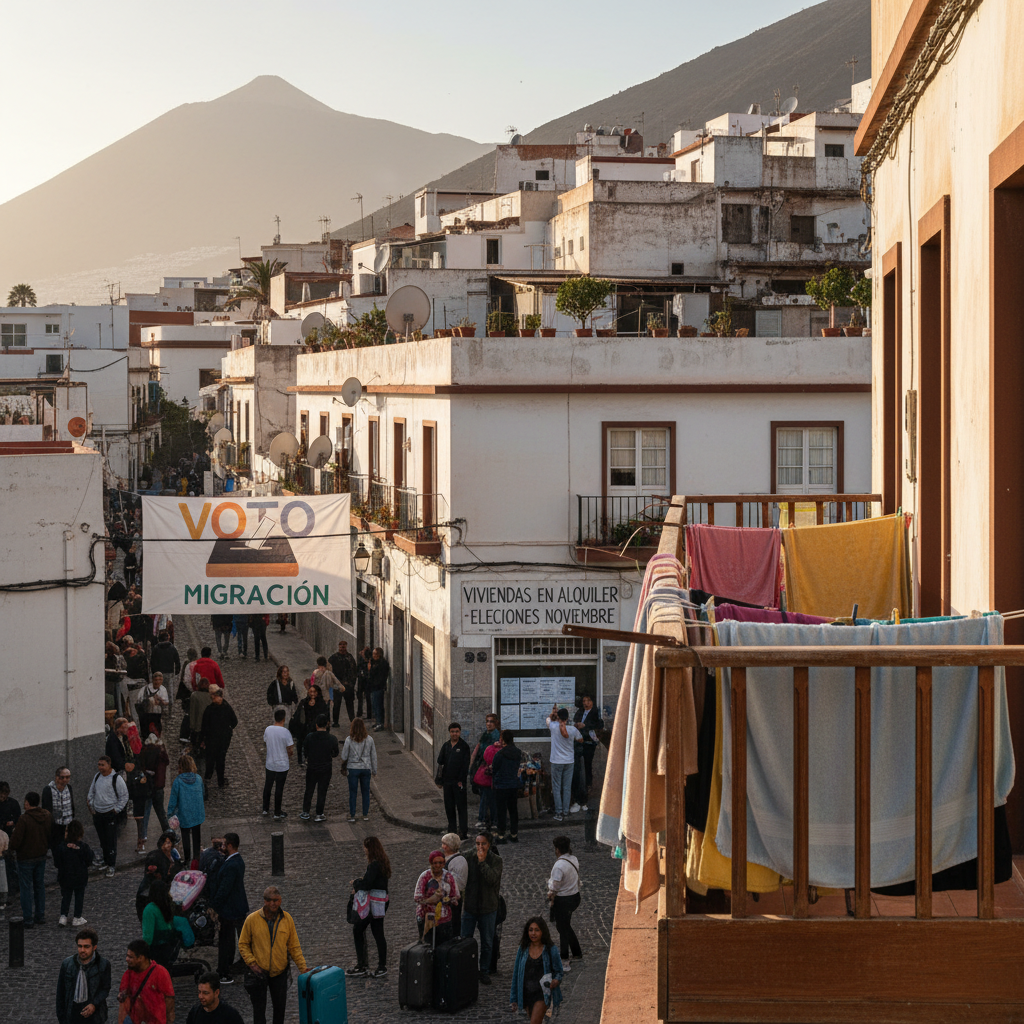
Migration and Housing Shape Spanish Election Focus
With the Spanish election campaign set to start on November 13, migration and housing have emerged as central themes in political discussions. While housing has long been a significant issue for voters nationwide, migration is increasingly taking center stage, particularly in the Canary Islands. This shift could sway election results and, in turn, affect policy decisions that impact the real estate market.
Throughout 2026, housing has consistently been a top concern for Spaniards, yet migration has gained prominence, especially in the Canary Islands, where it now ranks as the leading issue. This change reflects broader political and social tensions, with migration influencing debates and policies that might alter regional dynamics. The ongoing relocation of unaccompanied migrant minors from the Islands to the mainland highlights the administrative challenges at play.
In the Canary Islands, migration’s impact on politics has been significant, surpassing housing as a primary concern for local governance since early 2025. Nationally, migration has remained a key issue, peaking in July before the Ceuta crisis. The distinct prioritization of migration over housing in the Canary Islands underscores unique regional concerns that could shape future property market trends.
As migration continues to influence political narratives, its effect on the housing market is complex. While anti-immigration views might influence some voters, others see housing as a more pressing issue. The changing political environment could lead to shifts in migration and housing policies, impacting demand and investment in the Canary Islands. Those interested in the region’s property market should consider how these developments could affect future opportunities.