

Exploring the History and Legacy of Castillo Negro in Santa Cruz
Discover the rich historical narrative of Castillo Negro in Santa Cruz, from its strategic importance to its current state.
In 1587, King Philip II dispatched Leonardo Torriani to Santa Cruz to assess its defensive capabilities. Torriani proposed that additional fortifications flanking Castillo de San Cristóbal could create a protective barrier along the coast. His suggestions emphasized a coordinated defense strategy involving new sites at Paso Alto and another at what would become known as Castillo Negro.
For those interested in Tenerife’s historical depth, the island’s layered past enriches its appeal as a place to invest or explore. The fortifications speak to a resilient history that continues to captivate visitors and investors alike.
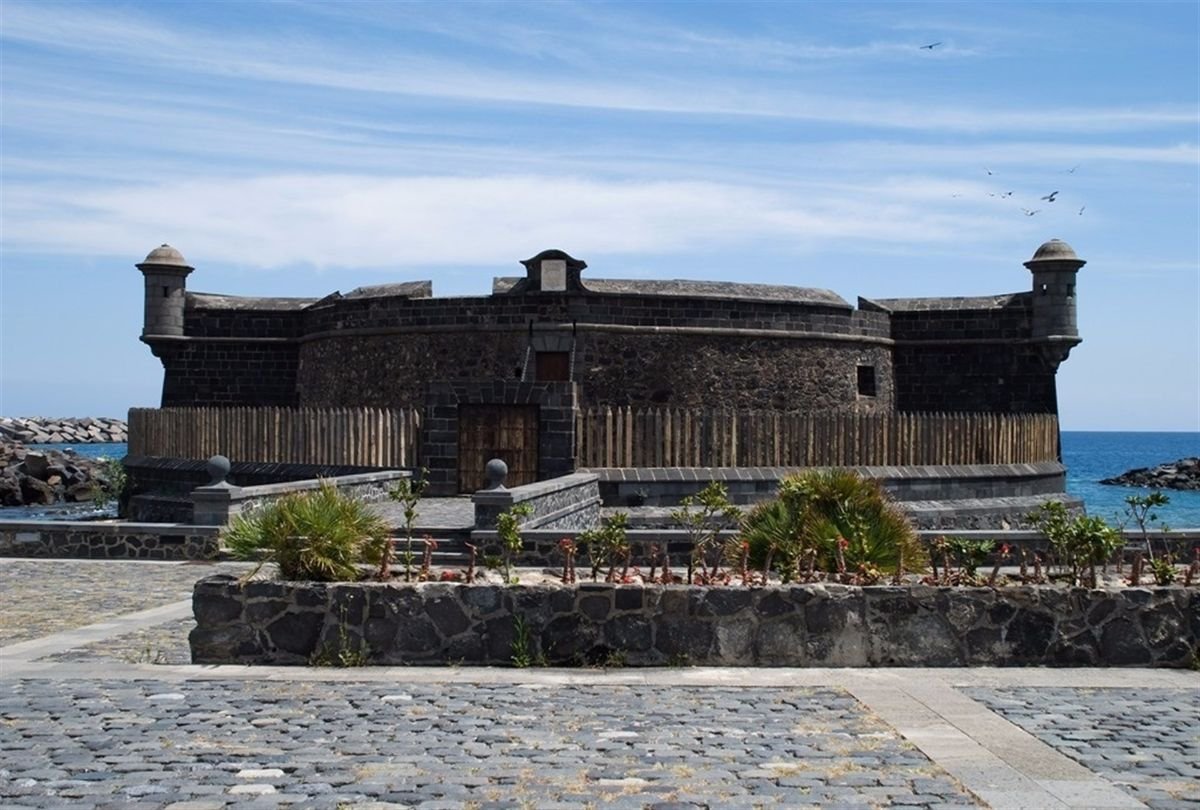
Despite Torriani’s proposals, it wasn’t until 1640, amidst the tensions of the Catalan revolt and Portuguese conflicts, that Captain General Luis Fernández de Córdoba took steps to construct the fort at Caleta de Negros. The construction began in 1641 and wrapped up in 1644. The original fort featured a circular stone tower with a drawbridge providing entry.
By 1765, the ocean’s wear and tear demanded a comprehensive renovation. Alejandro de los Ángeles led the effort, crafting a robust circular tower with thick walls made of basalt and masonry, outfitted with artillery positions and protective barriers.
For those thinking of making Tenerife their home, the storied sturdiness of these structures is a testament to the island’s enduring cultural foundations and community spirit. It’s an embodiment of tradition meeting present-day living.
Local artisans were vital to the project, with timber brought in from the forests of a nearby region and limestone sourced from a neighboring island. Despite its strategic defenses, Castillo Negro’s military activities were limited, such as dissuading British boats with warning shots during the events of July 25, 1797.
Visitors and history enthusiasts find a compelling blend of the past and the present in Santa Cruz. The castle, though currently off-limits to the public, remains an iconic piece of the area’s historical tapestry.
Known officially as Castillo San Juan but colloquially referred to as Castillo Negro, the fort’s name could be a nod to the dark volcanic stones used in its architecture or the bay it overlooks. In 1924, it was deemed unsuitable for military use. By 1948, its oversight was transferred to the Cabildo of Tenerife, with an aim to transform it into a military museum—a plan that eventually faltered. The city of Santa Cruz reclaimed it in 1982, ensuring its preservation, even though it remains closed to visitors.